Málaga Airport, code AGP, handles more than twenty million passengers a year and almost all of them pass through the same building. Whether you land from London at midday or from Dublin at one in the morning, the sequence is the same: a walk from the gate, passport control if you are coming from outside the Schengen area, the baggage hall and then the arrivals hall of Terminal 3, where the doors open onto the people waiting for you.
This guide walks through that sequence in order, with the things that trip up first-time visitors: which terminal you actually exit from, how long the queues take, where cash machines and SIM cards are, and what changes when your flight is late or lands after midnight.
Terminal 2 or Terminal 3? It does not matter for arrivals
Málaga has two terminals in use, T2 and T3, joined into one long building. Airlines are assigned to one or the other for check-in and departures, and your ticket may say Terminal 2. For arrivals this is irrelevant: the baggage halls of both terminals feed the same arrivals area, and everyone exits through the doors of Terminal 3. If someone is meeting you, tell them T3 arrivals and they will be in the right place whatever your ticket says.
The walk from the gate can be long. The newest piers are several hundred metres from the arrivals hall, with moving walkways for part of the way. Count five to fifteen minutes from the plane door to passport control or the baggage belts, more if you have small children or reduced mobility, in which case the airline's assistance service meets you at the aircraft.
Passport control: Schengen and non-Schengen arrivals
Flights from Spain and other Schengen countries arrive as domestic: there is no passport check and you go straight to the baggage belts. Flights from the United Kingdom, Ireland, Morocco and anywhere else outside Schengen pass through border control first. Since the introduction of the EU's electronic entry system, non-EU travellers register fingerprints and a photo at the border on their first entry, which lengthens the queue on busy days.
How long it takes depends on how many flights land together. Mid-morning and early evening in summer, when several UK flights arrive within minutes of each other, the queue can take thirty to forty-five minutes. Late at night and in winter it is often under ten. EU passport holders have the automated gates, which are quick when they are open.
- Keep passports in hand luggage, never in the hold bag.
- Children need their own passport, including babies.
- Have your accommodation address ready in case the officer asks.
Key takeaways
- Everyone exits through Terminal 3 arrivals, whatever the ticket says.
- Non-Schengen arrivals can queue 30 to 45 minutes at busy times; keep passports in hand luggage.
- Golf clubs and pushchairs come out on the oversized belt.
- Pre-booked drivers wait at the barrier facing the sliding doors with a name board.
- Delays change nothing with a tracked fixed-price transfer; diversions and cancellations need a message.
Baggage reclaim and oversized items
The belts are in a wide hall with screens listing flight numbers. Bags from large aircraft take a while: allow twenty minutes from landing on a normal day, and thirty or more when several flights arrive at once. Golf clubs, surfboards, pushchairs and bicycles come out on the oversized belt at the end of the hall rather than on the flight's belt, which catches out golfers who stand by the wrong one.
There are trolleys throughout the hall and they can be taken into the arrivals area and out to the kerb. Toilets are inside the baggage hall, before you exit, which is useful because once you pass the doors you cannot come back in.
The arrivals hall: where drivers, families and taxis wait
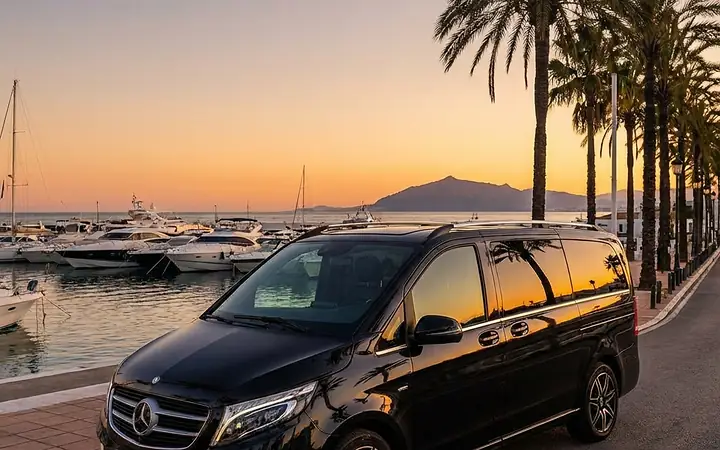
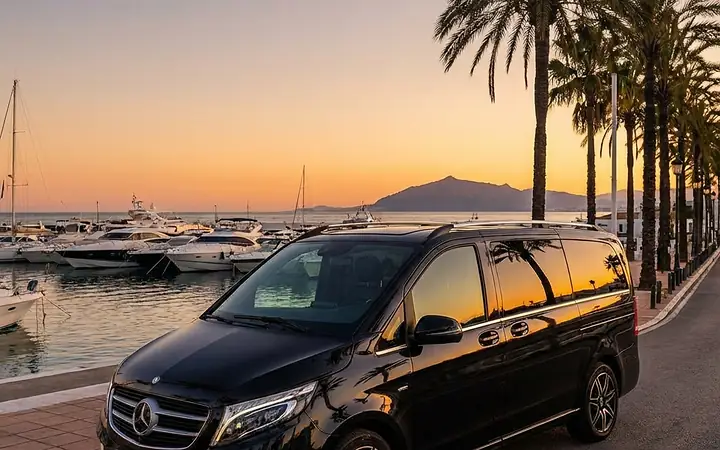
You leave the baggage hall through sliding doors into the arrivals hall of Terminal 3. Directly in front of the doors is the barrier where people wait: relatives, hotel representatives and drivers holding name boards. This is where a pre-booked driver stands, usually with a sign showing the passenger's surname, and it is the single most useful thing to know before you land: look for your name at the barrier before you look for anything else.
Beyond the barrier the hall opens out with cafés, car hire desks and the exits. The official taxi rank is outside the doors to the left, with a queue system managed by staff at peak times. The airport bus and the train station are reached by following the signs across the road and down the escalators; the train runs into Málaga city and to Fuengirola, not to Marbella.
Cash, cards, SIM cards and coffee
Cards are accepted almost everywhere on the Costa del Sol, including in most taxis and by our drivers, but a little cash is useful for beach bars and small shops. There are cash machines in the arrivals hall and in the baggage hall; the ones belonging to Spanish banks charge lower fees than the standalone currency-exchange machines, which also offer a poor rate if you accept their conversion.
If you need a local SIM, there are shops in the arrivals hall selling prepaid cards, and the same cards are cheaper in supermarkets and phone shops in town. Most European contracts roam free in Spain, and UK travellers should check their provider's current policy before relying on it. Coffee and sandwiches are available in the hall at any hour; the choice narrows after midnight.
Late flights, delays and diversions
Málaga is open around the clock and many low-cost flights arrive after 23:00. The airport looks the same at 01:00 as at 13:00, apart from quieter shops, and the motorway to Marbella is empty. If you have a driver booked with a fixed price, a late arrival changes nothing: the price is the same and the driver has been tracking the flight number, so he is at the barrier when you walk out even if the plane is two hours behind.
The situations that need action are diversions and cancellations. If your flight is diverted to Seville or Granada, or cancelled and rebooked for the next day, contact whoever is meeting you as soon as you know. A local company can move the pickup to the new flight; a booking made through a marketplace may need to be cancelled and remade.
- Delay: nothing to do, the flight is tracked.
- Diversion: message the transfer company with the new airport and time.
- Cancellation: send the new flight number as soon as you have it.
From the hall to the coast
The drive out of the airport joins the MA-20 ring road and then the AP-7 toll motorway westbound towards Marbella, or the A-7 eastbound towards Málaga city and Nerja. Cabopino, the first Marbella exit, is 36 minutes away; Marbella centre 45; Puerto Banús 50; Estepona an hour. Those times hold at most hours because the toll road rarely jams; the free coastal road can double them in August.
If you are driving a hire car, the car hire return area and the pickup car parks are across the road from the terminal, reached by a footbridge, and the signs for Marbella take you onto the ring road. If you are being driven, you need nothing more than your name on a board and your suitcase on a trolley.
Get your fixed price
Pay the driver on arrival. No card needed now.